by John Ellis
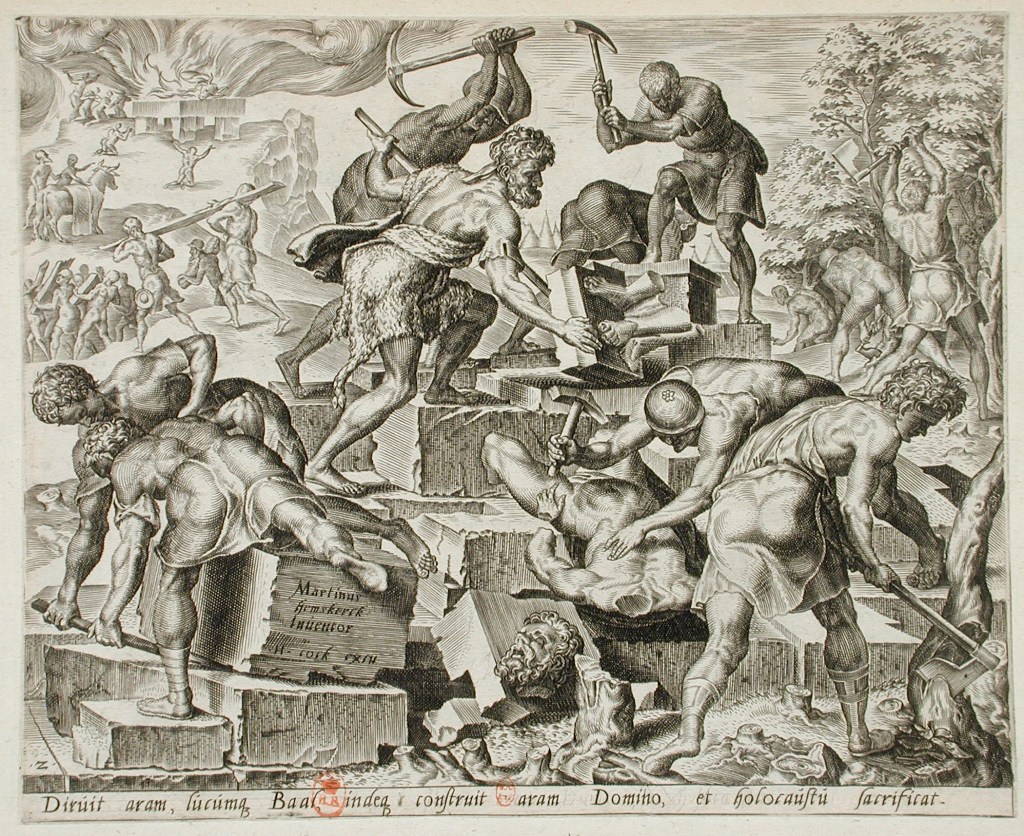
In Rogues, his last book published during his lifetime, Derrida prophesied that his matrix of deconstruction requires of humanity “a certain unconditional renunciation of sovereignty.” It’s an opaque statement delivered by an intentionally opaque man. Demonized by many, atheist and Christian alike, Derrida remains a modern-day Gideon of sorts. The opaqueness of his work parallels the darkness of night under which Gideon smashed the idols. And make no mistake, Derrida smashes idols. If they would allow him, he could help evangelicals smash some of their most beloved idols.
Ironically, during my twenties, I gravitated towards disruptive thinkers – Kierkegaard, Nietzsche, Kafka, Marx, etc. – because I longed to claim full sovereignty over and for myself. What I didn’t realize at the time – one of the many things I didn’t realize at the time – was that my rebellion was multidimensional. For sure, like all humanity, I desired to scale the heights of Babel and push God off his throne. But another rebellion existed in my soul; one that the Holy Spirit used to draw me to the Father. And one that’s taken me years to recognize and articulate. A rebellion that longs to see the Church embrace her role as a prophetic disrupter.
Now, I’m drawn to disruptive thinkers, and a much larger retinue than I was aware of when I was in my twenties – adding Simon de Beauvoir, Frantz Fanon, Derrida, Horkheimer and Adorno, etc. – because in their larger program of rebellion against God, which is undeniably there, a deep understanding of the Fall and the Curse exists in their thoughts. They disrupt Vanity Fair’s party. They wouldn’t articulate it in the language of Genesis 3, to be clear. In fact, they all eventually reduce to an anthropocentric project. But they intuitively recognize that the Western worldview is on an untenable utopian track. They see, feel, and denounce the Oedipal hubris of a culture that has wrested epistemic sovereignty from our Father. That hubris, our beloved sovereignty, is the birthright for those of us in the West, even, if not especially, for those who claim to be Christian.
When Nietzsche said, “God is dead,” he added, “And we have killed him.” While most of Nietzsche’s parable sees the Madman crying to the town’s atheists, it ends with the Madman’s prophetic denunciation while standing inside of a church that, “What after all are these churches now if they are not the tombs and sepulchers of God?”
Nietzsche was and remains correct.
A good friend recently asked me what I thought it meant to work for the good of the city God has placed us in. I replied that we need to first start by rejecting the definition of “good” given us by Western culture. Only until we topple our idols – kill our new gods – can we engage in the Kingdom work of our King. I’m afraid our love for Western Culture is an idol that leaves no room for Jesus in our heart. We need a wholesale “renunciation of sovereignty.” Doing that, though, requires a paradigm shift, if not a gouging out of our Oedipal eyes. Unless we do that, how can we see Jesus? And if we can’t see Jesus, how can we bear witness to him?
 Practically Known Theology