by John Ellis
My wife flew out west this week for work. Over the course of her travels, she had to sit in airports due to flight delays. Since air traffic controllers are not getting paid, many are calling in sick to work causing flight delays around the country. And, really, can we blame them? It’s not their fault, after all. Their lack of pay is a consequence of the current government shutdown. No doubt, regardless of where you land on the political spectrum, you can think of things and people being negatively affected by the shutdown. Civil servants are not receiving paychecks. Government programs are not receiving funding. Many people, both directly and indirectly, are suffering the effects of a government shutdown they had nothing to do with. You know who’s still receiving their pay? Congress. The very people to blame for the shutdown. Maybe it’s time for a new Constitutional amendment.
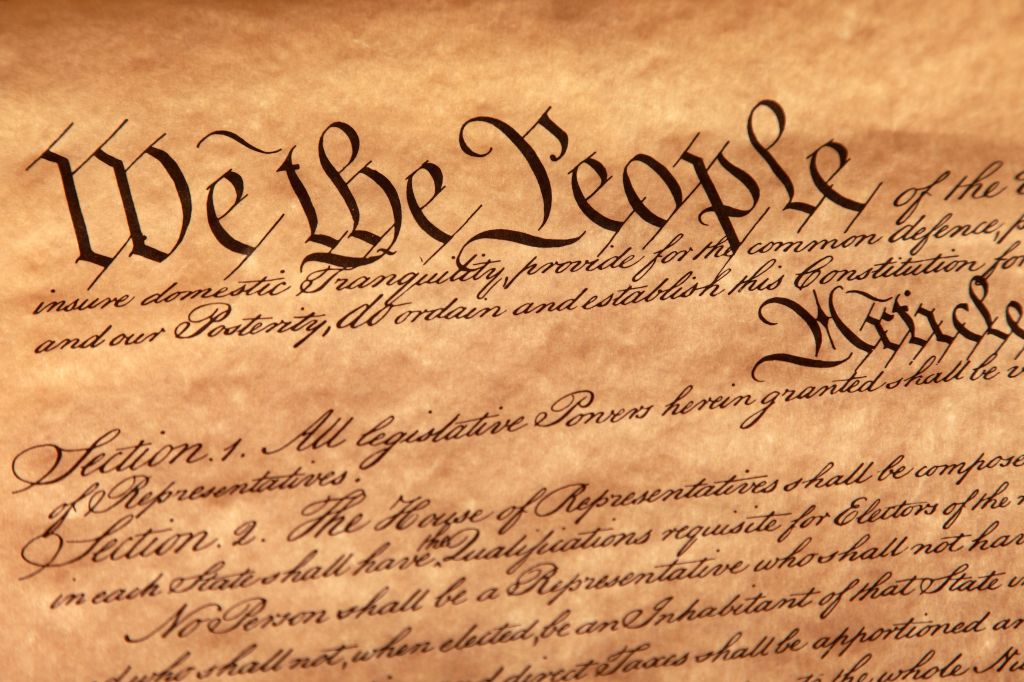
May 5, 1992, was the last time an amendment to the Constitution was ratified. Nicknamed the Rip Van Winkle Amendment, the 27th says that if Congress votes for a pay increase for itself, that raise won’t go into effect until the next Congress. If the people don’t think they deserve the pay raise, they have the chance to vote them out of office.[1] Not incidentally, the amendment was initially submitted to the states for ratification in 1789 as part of the original twelve amendments Congress sent to the states. Only ten, numbers three through twelve, were ratified at the time, and those ten are now known as the Bill of Rights. Why the states didn’t ratify what is now the 27th isn’t really known. Records around that specific amendment’s debate are scarce. Constitutional scholar Akhil Reed Amar posits, “How could state legislators vote for Congress’s Second Amendment without also triggering public demand for similar amendments to their respective state constitutions regulating their own salaries?”[2] Regardless of the reasons for why the states originally passed on it, the amendment found new life in the 1980s, culminating in its ratification over two-hundred-years after Congress first submitted it to the states, hence the 27th’s nickname. Thirty-three-years later, and it seems like it may be time to pass the 28th Amendment depriving members of Congress of their salaries during a government shutdown. However, as good – and just – as that sounds, there is a Constitutional hiccup.
Article I, section 6 of the Constitution declares, “The Senators and Representatives shall receive a Compensation for the Services, to be ascertained by Law, and paid out of the Treasury of the United States.” Members of Congress’ salaries are Constitutionally guaranteed. Maybe – hopefully – there’s a way to construct an amendment that works within the confines of Article I, section 6.
That being acknowledged, I do believe that the wording, especially the prohibitions, in Article 5 allow for it. But it’s going to take a far greater constitutional scholar than I am to determine how to legally maneuver around Article I, sections 6, and how to word the amendment. Maybe it can’t be done. What I do believe, though, is that it’s a question worth asking and debate worth having. It’s not just/fair that Congressional members ask others to bear the negative cost of their inability to do their job. If air traffic controllers do not get paid during government shutdowns, then neither should members of Congress.
[1] In 1816, Congress voted for the first pay raise for itself. The voters punished the incumbents during the next election.
[2] Akhil Reed Amar, The Bill of Rights (New Haven, CT: Yale University Press, 1998), 18-19.
 Practically Known Theology
Wait – politicians setting their own salaries? That would be unthinkable in Aotearoa. The public backlash would be swift and fierce – our system relies on independent oversight precisely to avoid that kind of self-dealing. In New Zealand, politicians do not set their own salaries. An independent body, the Remuneration Authority, determines their pay. The idea of politicians setting their own salaries would be politically radioactive here.
LikeLike